
A JPEG can look perfect at 100% zoom and still be a poor print file. We see it when the greeting lands on the crease, or the logo sits so close to the trim that a small shift on the cutter clips it. Usually the brief never said whether 5 x 7 was the closed size or the open size, and nobody marked the fold.
HangPeng prints custom greeting cards in Yiwu. If you put the closed size, the open size, the fold, and a file with bleed in the first email, we can work from that before a plate is made. This article is about the artwork. Paper, finishes and envelopes live in our spec guide to custom greeting card printing.
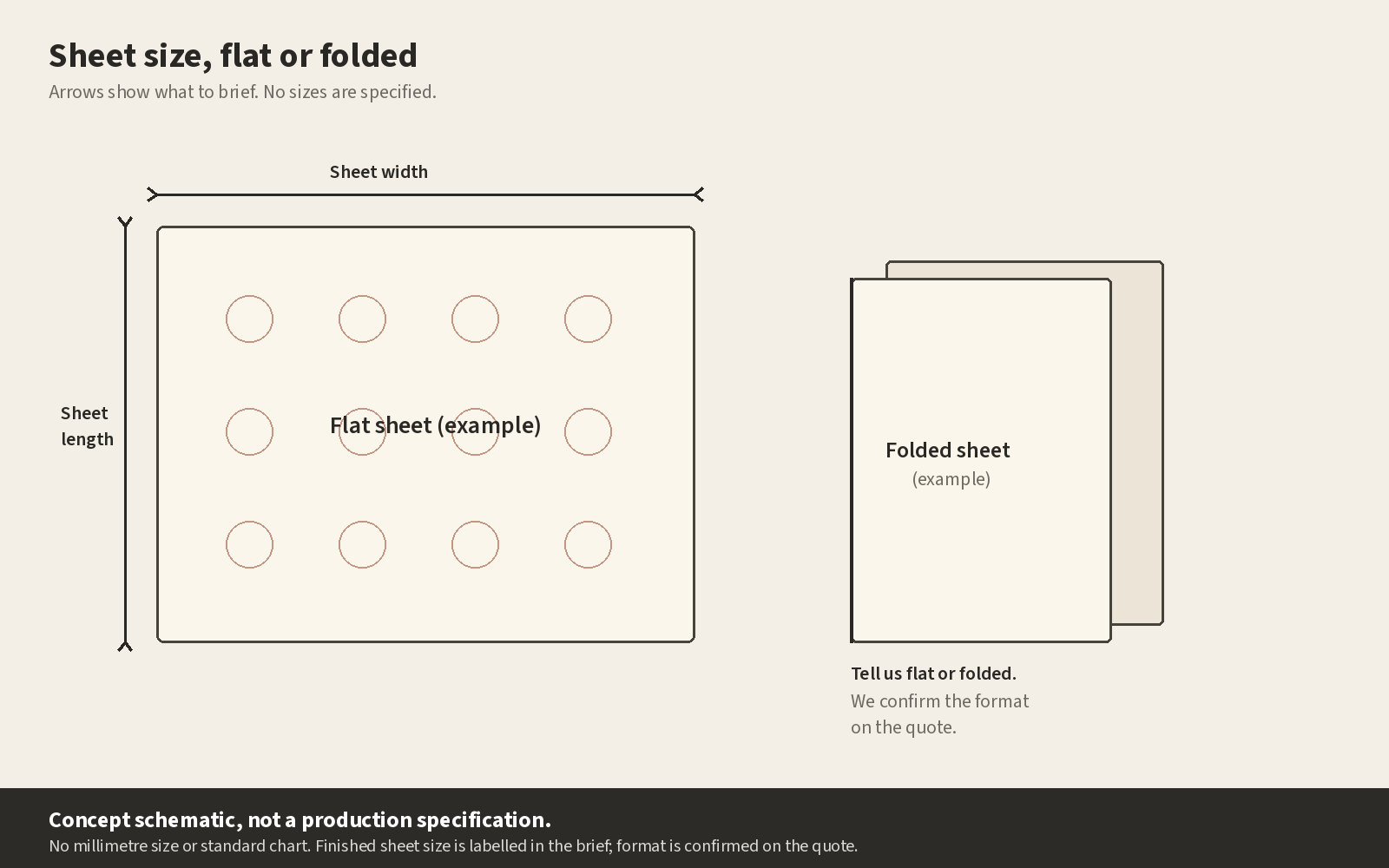
Start with closed size and open size
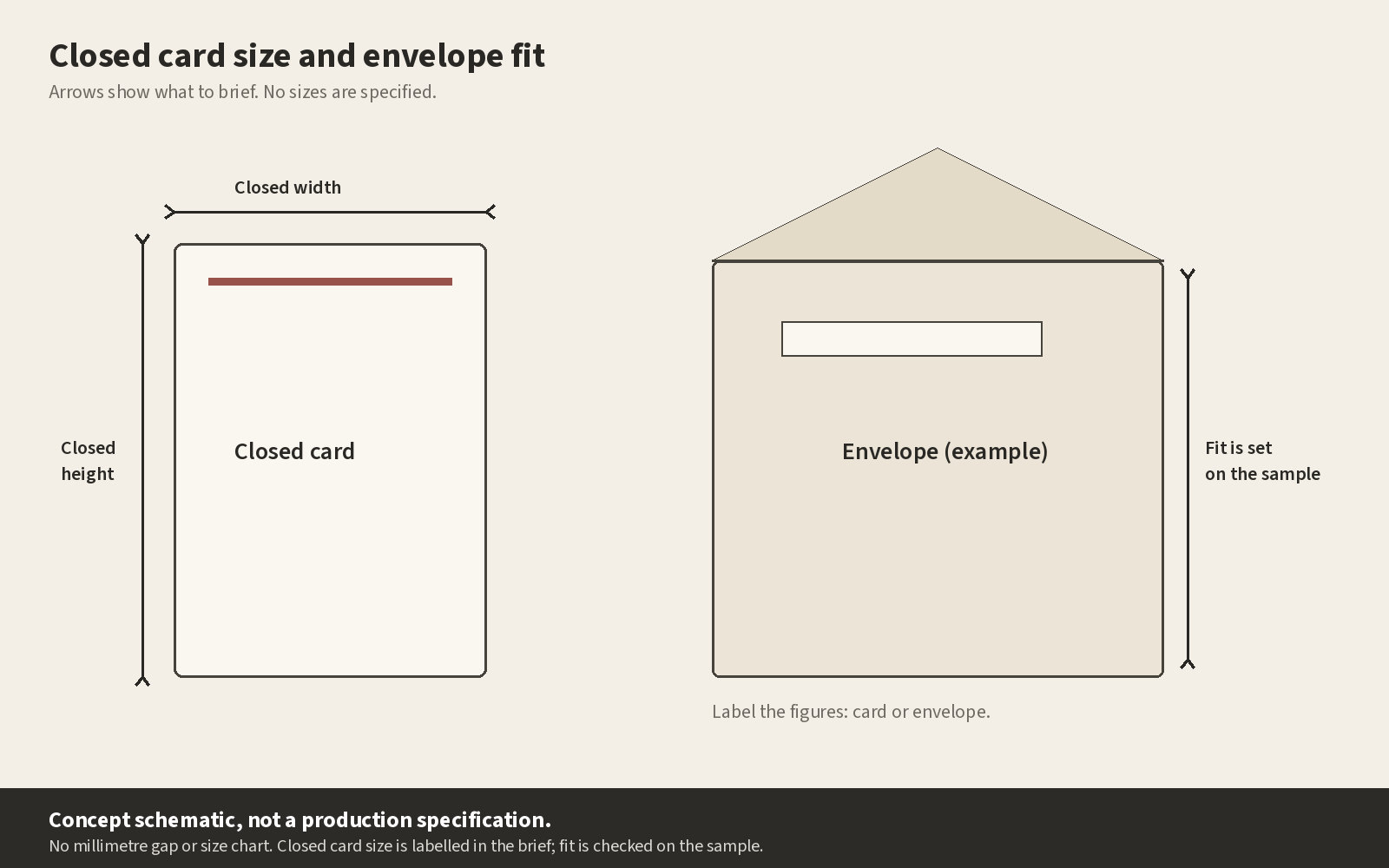
Send both measurements, and write “closed” or “open” after the numbers. A 5 x 7 with nothing after it might mean the card as it sits on a rack, or the card once it is opened out. Those two files are not interchangeable, and the first layout is often wasted while we ask.
If you have a card in a drawer that you want to follow, measure it shut, open it, measure it again, and photograph both. No sample in hand? Tell us the closed size you want, and whether it folds on the long edge or the short one. The inside greeting sits in a different place on a side fold than it does on a top fold.
We print festival greeting cards, cartões de felicitação corporativos, and 3D pop-up greeting cards. Name the type in the same email. Pop-up work is a different structure, and the art has to leave room for the pieces that stand up. Sending a flat layout and asking us to “make it 3D” is not a brief we can build from.
No official size list lives in this article. If you already use a size in your market, even one that is not on a product page, ask on the quote and send the two measurements. We don’t need a template chart to start that conversation.
Mark the fold, then keep type off it
Mark the fold on the file, as a guide line we can actually see. Or just write it: folds in half, on the long edge, greeting inside left. If a dark colour on the front runs over the spine, say that in the same note. On coated board, heavy ink at a tight crease is where a crack likes to show, which we already flag in the spec guide. Leave a little room in the file, not later on the press.
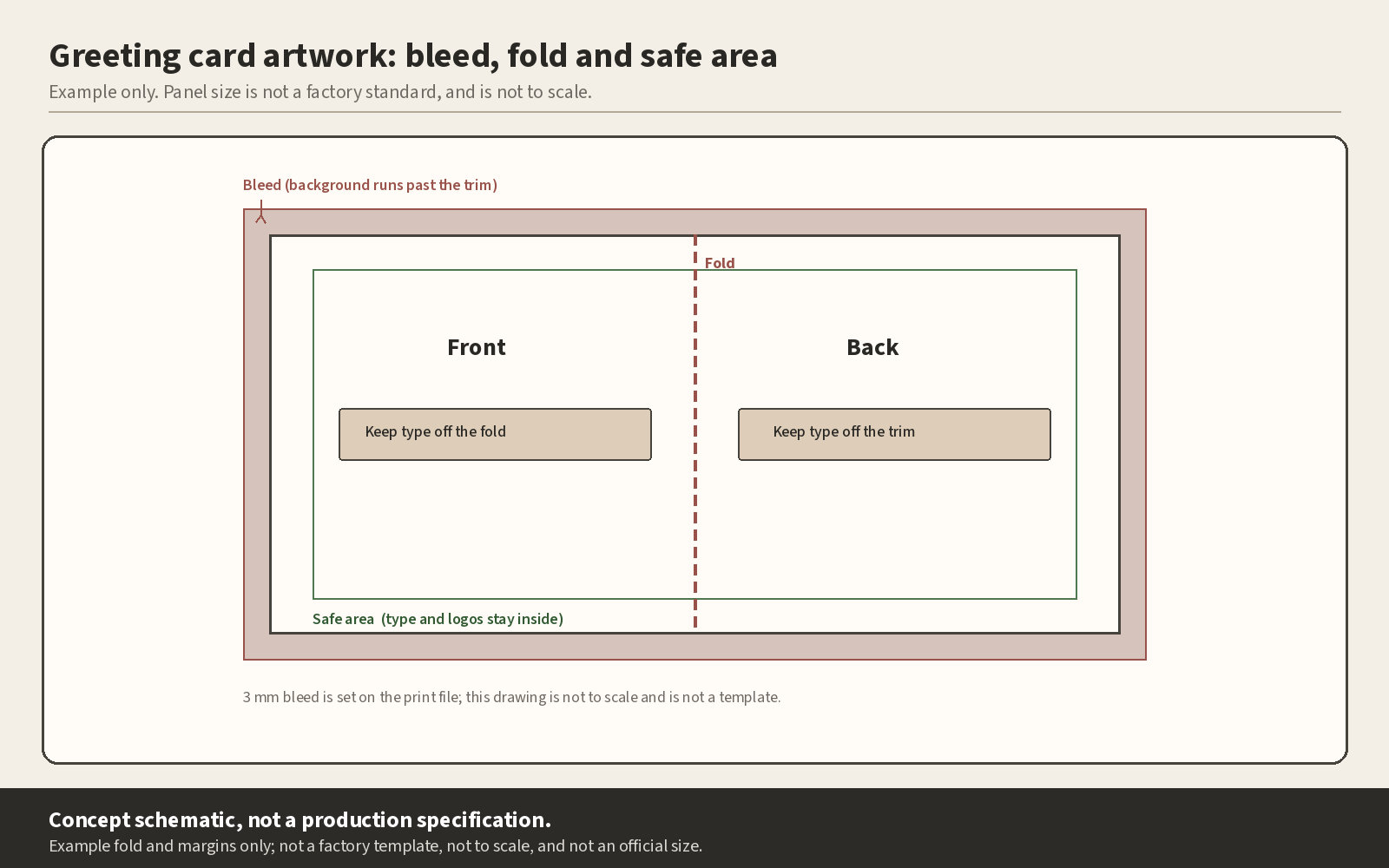
Keep the greeting, the logo, and any foil or spot-UV work off that crease. Type that looks nicely centred on a flat screen often lands right on the fold once the card is shut. If a design has to cross the spine on purpose, say so. We’ll look at it on the proof, not only in the JPEG.
If you already have a card with the fold you want, photograph it open and closed and mark the file to match. That beats describing the fold from memory.
Bleed and a safe area for type
On our print files the bleed is 3 mm, all the way around. The background and any photo have to run past the trim, so a small shift on the cutter does not leave a sliver of white. If your file stops dead at the trim line, it has to be extended before we go to press.
Type, logos and foil also need to stay back from the trim, not only from the fold. We call that the safe area, and we mark it on the print file and on the proof. We have not published a second millimetre figure for that margin, and we would rather you didn’t invent one in the brief. If something is tight to the edge on purpose, say so; we’ll look at it on the sample.
A screen JPEG with no bleed is a useful first reference and a poor printing plate. If that is all you have today, send it anyway. Note that a print-ready file will follow, or that you want us to rebuild the layout for the press, and we’ll put that work on the quote. A social-media export is not a finished plate.
Colour and the file we actually print
The file we print from is CMYK. Outline the fonts, or send the font files with it. RGB can look fine on a monitor and then move once it is on paper. It moves even more on kraft or a cream stock than it does on a bright white sheet. If you have a Pantone you need to hit, put the number in the email; we check it on the printed proof, not against a phone snapshot of that proof. No colour-tolerance number is posted on this page.
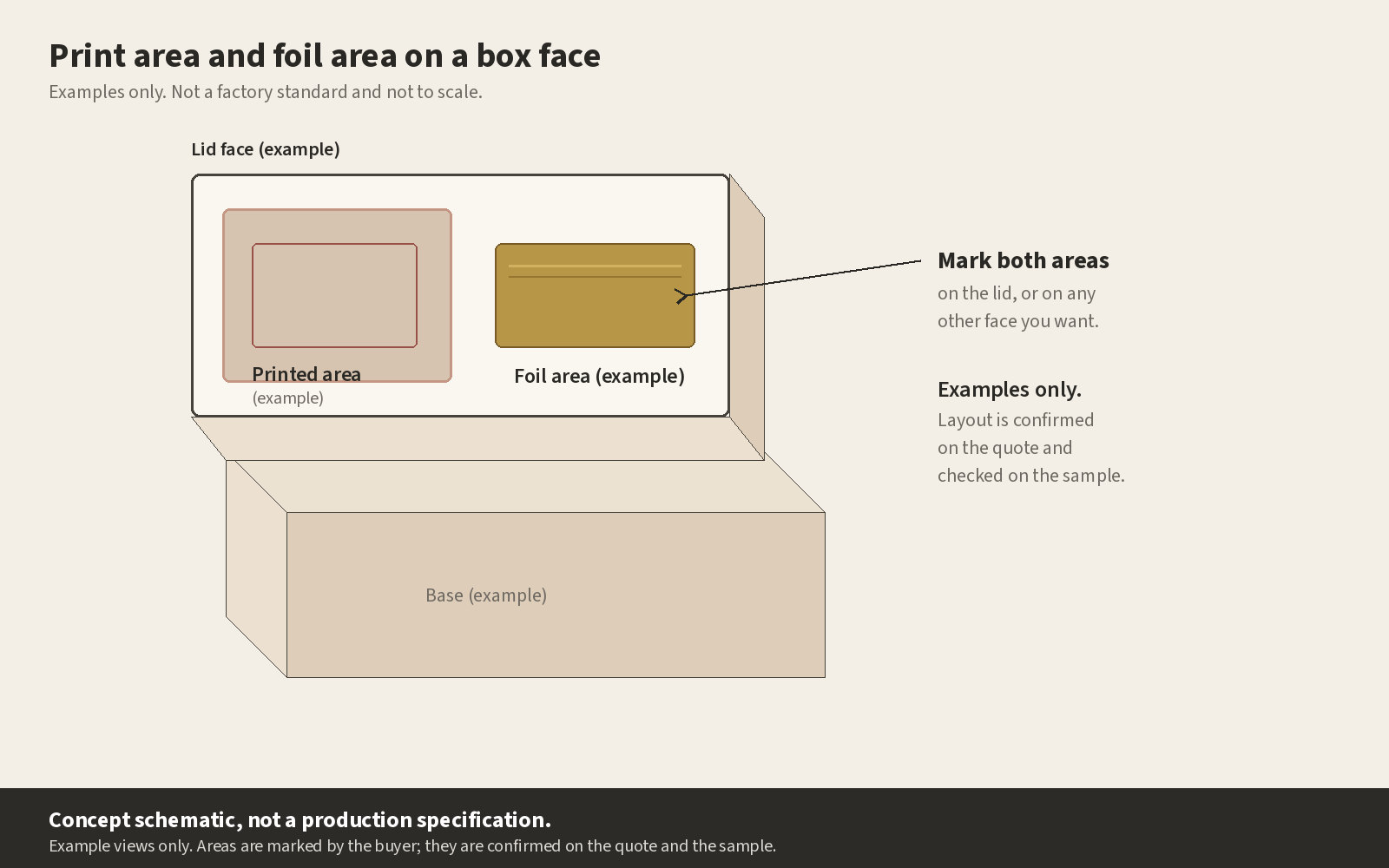
If the card has foil, embossing, or spot UV, put those on a separate layer or a clearly marked plate, and tell us which colour or finish each one is. A single flattened JPEG hides that. The spec guide covers how those finishes behave; this article only needs them marked on the artwork so they land in the right place.
Front, back, and the inside panels
Name the panels when you send the file:
- Front, as the card sits on a rack or on a desk
- Back, including any logo, origin line, or barcode you want
- Inside left and inside right, or a single inside spread if that is how you designed it
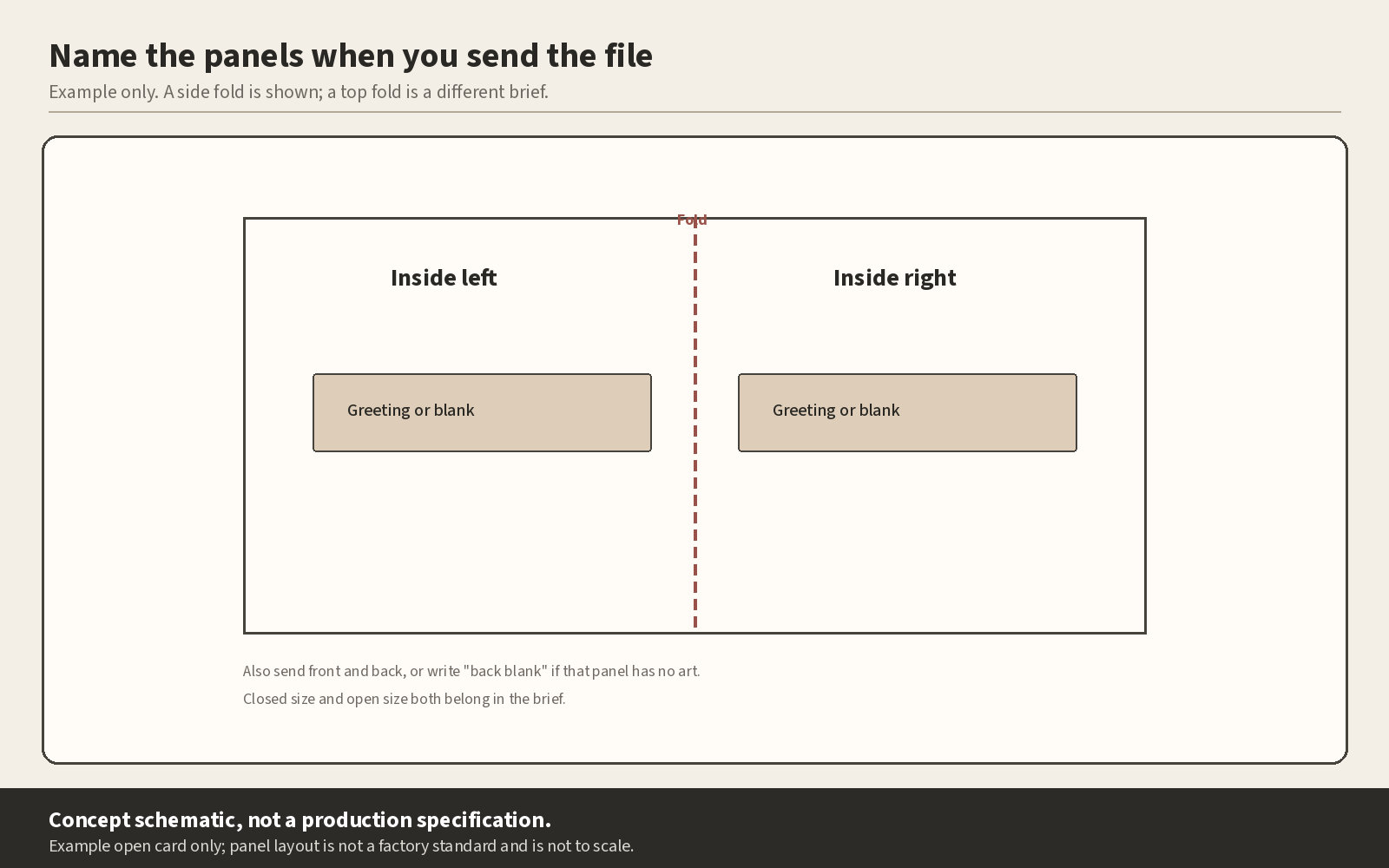
If the inside is blank except for a short greeting, say that. If you want a full inside print, send that art too. People often approve a beautiful front and then remember the inside copy after the sample has already been printed. Put the inside in the first file if you already know it.
The back is easy to forget on a folded card. If you don’t want anything there, say “back blank” so we don’t have to ask.
Check the sample, not only the screen
Custom greeting cards start at 5,000 pieces per order. A custom sample with your artwork takes 7 to 10 days. Bulk production is usually 15 to 20 days after approval, depending on quantity. Prices are EXW Yiwu.
When the sample arrives, fold it. Look at the spine, the trim, and the inside greeting. Hold it next to the envelope if the order includes one. If a line is tight to the edge, or the fold cuts a letter in half, change the file now. A second proof takes time; it still costs less than finding that after bulk has started.
What to send with a custom greeting card artwork brief
Send us:
- Closed size and open size, and which edge folds
- The print file with 3 mm bleed, or a reference file plus a note that a print-ready file will follow
- Front, back and inside art, or a clear note if a panel is blank
- Any foil, embossing or spot UV, marked on the file
- Pantone numbers, if you have them
- Quantity and the date you need the goods in hand
- Whether the card is festival, corporate, or a 3D pop-up
Envie um e-mail para aaron@yc-gift.com ou pengtaolou97@gmail.com, entre em contato pelo WhatsApp +86 130 5899 5000 ou utilize nosso [link/sistema/plataforma]. página de contato. If you still need to settle paper and finishes, keep our greeting card spec guide open beside this list.
Perguntas frequentes
What is the MOQ for custom greeting cards?
5,000 pieces per order.
Do I have to send a print-ready file on day one?
No. A reference JPEG is enough to start a conversation. We still need a print-ready file, with bleed, before we go to press, or we rebuild the layout and confirm that work on the quote.
How much bleed do you set?
3 mm on the print file, all the way around. Extend backgrounds and photos past the trim. Keep type and logos away from the trim and the fold; we mark that safe area on the file and the proof.
How long does a custom greeting card take?
A custom sample with your artwork is usually 7 to 10 days. Bulk production is usually 15 to 20 days after approval, depending on quantity. We’ll confirm both timings on the quote. Prices are EXW Yiwu.
Can you print a size I already use, even if it is not on a product page?
Yes. Put the closed size and the open size on the quote request. A sample or a photo helps if you have one. You will not find a fixed size chart on this page; we can still quote a size you already sell or mail.