
For B2B brands planning gift packaging in 2026, practical sustainability, flexible customization, tactile finishing, space-efficient structures, and product-specific design are key considerations. Instead of following every emerging trend, brands should select packaging solutions based on product requirements, handling conditions, storage efficiency, and brand presentation. Paper bags, gift boxes, and greeting cards can then be developed as a coordinated packaging system that supports consistent presentation across retail, seasonal, and corporate applications.
What Gift Packaging Trends 2026 Mean for B2B Brands
From Seasonal Decoration to Long-Term Brand Value
Gift packaging increasingly serves both a presentation and functional role, with structural integrity, product protection, and brand presentation considered together. A festival gift bag, rigid box, or greeting card can carry the same colors, message, and level of finish, creating a consistent presentation across retail display, product delivery, and the customer opening experience.
Paper Bags Designed for Practical Durability
More sustainable gift packaging should balance material efficiency, durability, product protection, and end-of-life considerations rather than focusing on material reduction alone. Side gussets should open cleanly, the bottom should sit flat, and handle attachments should match the expected carrying pattern. Reinforced handles and bottoms can be specified for applications that place greater stress on these areas.
Personalization for Seasonal and Retail Campaigns
Digital Printing for Focused Runs
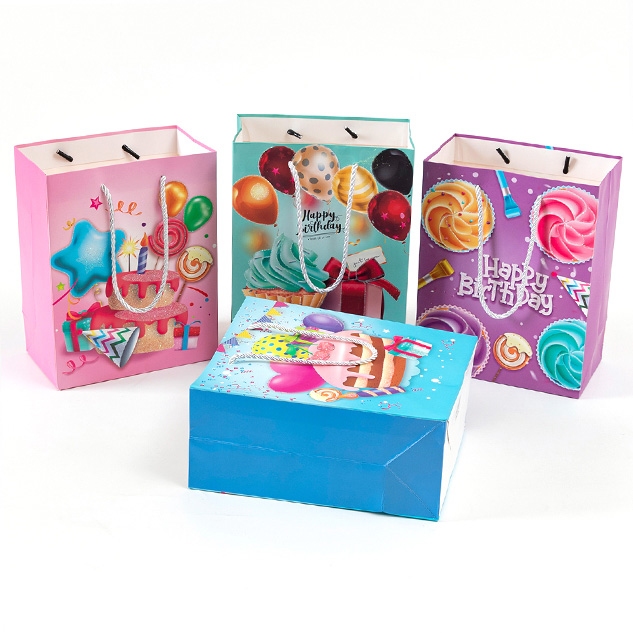
Digital printing can support variable artwork and shorter production runs without the plate-making requirements associated with conventional offset printing. Suitability depends on the product specification, material, dimensions, quantity, and finishing requirements.
Coordinate Bags, Boxes, and Greeting Cards
A paper gift bag can manage carrying, a box can organize or protect the product, and a greeting card can deliver the campaign message. When the three elements share a controlled color palette, typography, and finish hierarchy, they read as one experience rather than unrelated packaging pieces.
The HangPeng product collection includes paper bags, cardboard boxes, and greeting cards that can support coordinated seasonal, retail, and corporate programs. Visual consistency should be planned alongside dimensions and production methods so each component remains practical.
Tactile Finishes That Create a Premium Experience
Foil Stamping and Embossed Details
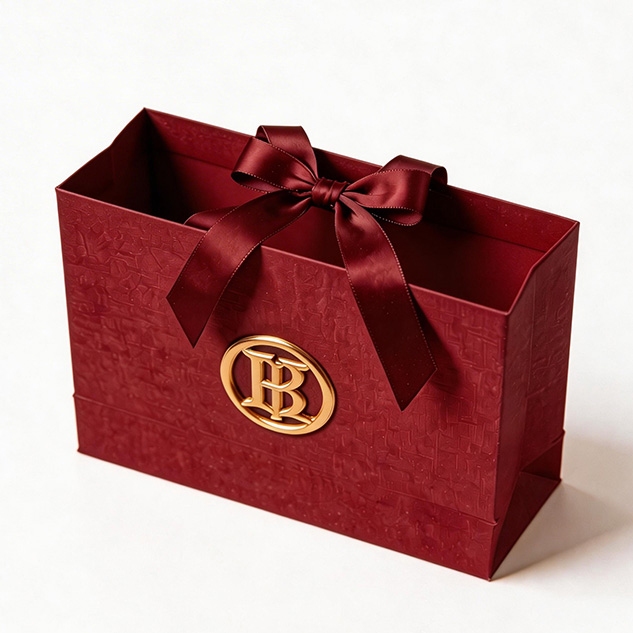
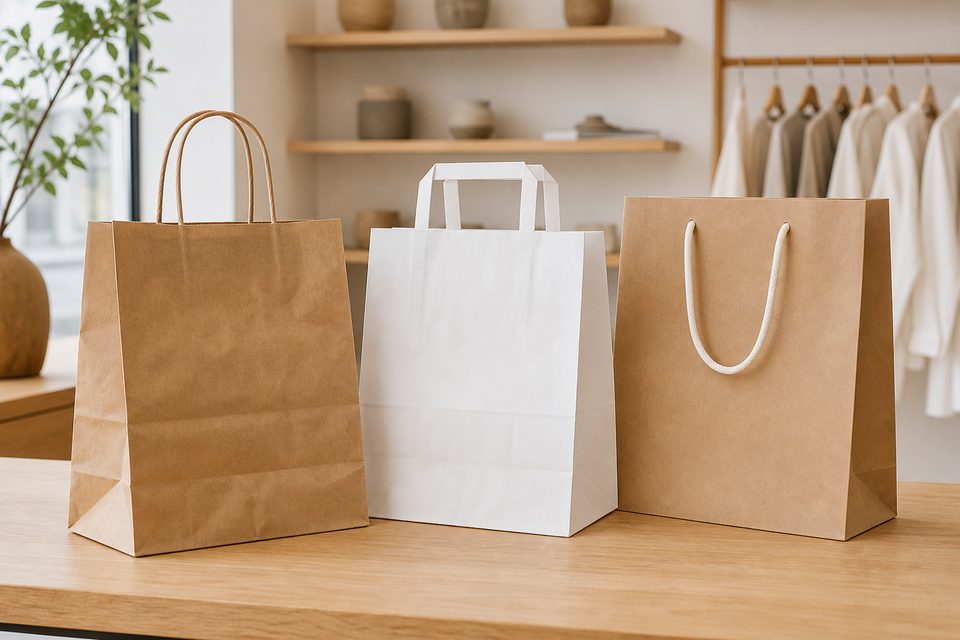
Tactile finishes remain relevant in 2026 because they add contrast without requiring dense graphics. Foil stamping can create a controlled reflective accent, while embossing or debossing changes the surface through raised or recessed detail. Used selectively, these processes can draw attention to a mark, pattern, or small message.
Use Spot UV and Windows With Restraint
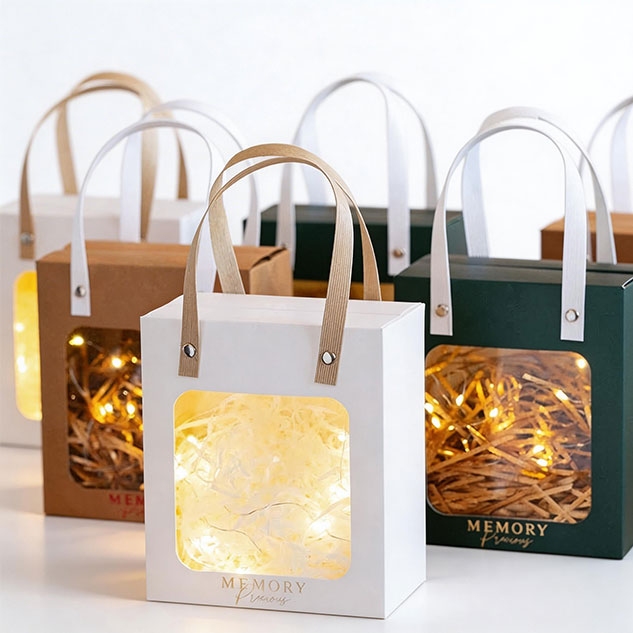
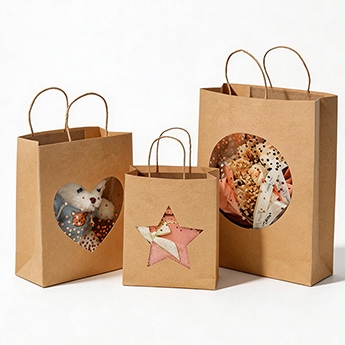
Spot UV introduces localized gloss against a contrasting surface and can emphasize selected graphic elements. Window patching gives a direct view of food, gifts, or decorative contents, but the opening also changes the bag or box wall and must be positioned away from critical folds and seams.
Packaging Formats for Different B2B Applications
Festival Gifts, Corporate Programs, and Events
Festival and corporate programs often need packaging that works across multiple products and presentation settings. Gift bags with rope, paper, or ribbon handles can create a more ceremonial appearance, while paper handles may suit straightforward retail distribution. Greeting cards can carry a seasonal message without forcing all copy onto the bag or box.
Apparel, Beauty, Wine, and Food Packaging
Garment packaging needs sufficient width and gusset depth for folded products. Wine bags require narrow proportions and a stable base, while beauty sets may benefit from a gift box that keeps multiple items organized. For food applications, packaging specifications should address the product’s barrier, grease resistance, sealing, ventilation, and regulatory requirements rather than relying on generic sustainability or performance claims.
Packaging Format Comparison: Bags, Boxes, and Greeting Cards
| Packaging Format | Best For | Key Structural Considerations | Storage | Common Finishes |
| Paper Gift Bags | Retail, corporate gifts, events | Gusset, base, handle attachment | Flat | Foil stamping, embossing, UV |
| Folding Gift Boxes | Apparel, beauty, retail sets | Dieline, folds, closure | Space-efficient | Foil, embossing, lamination |
| Rigid Gift Boxes | Luxury and premium gifts | Board thickness, closure, structural rigidity | Higher storage volume | Foil, embossing, specialty paper |
| Wine Bags | Wine and bottle gifts | Narrow profile, reinforced base, handle strength | Flat | Foil, embossing |
| Greeting Cards | Seasonal and corporate messaging | Paper stock, folding, inserts | Flat | Foil, embossing, die-cutting |
For B2B buyers, the right packaging format depends on product dimensions, weight distribution, structural requirements, presentation needs, storage conditions, and shipping efficiency—not simply on appearance.
Designing for Storage, Shipping, and Presentation
Use Space-Conscious Structures
Many paper bag formats can be stored flat before use, although handle construction, reinforcement, inserts, and finishing can affect storage volume. The right format depends on how the packaging will be filled, displayed, transported, and stored at the destination.
Match Gussets, Handles, and Bases to Products
A shallow gusset can place excessive pressure on the side folds, while an unnecessarily deep gusset may allow the product to move. Handle attachment spacing influences load distribution, carrying balance, and user comfort.
How HangPeng Turns Trends Into Practical Packaging
Digital and Physical Sampling
Hang Peng can develop custom dimensions, materials, printing, handles, windows, and structural details as a coordinated packaging solution. Digital 2D/3D samples can help teams review overall dimensions, visual appearance, structure, and finishing placement before physical sampling.
An optional physical pre-production sample allows the package to be handled with the intended product. Teams can inspect color, opening behavior, balance, handle comfort, base stability, box closure, and the relationship between decorative processes and structural lines.
Integrated Printing, Finishing, and Assembly
Available production processes include offset, flexographic, and digital printing, followed by options such as foil stamping, embossing, debossing, spot UV, die-cutting, window patching, bag making, and box assembly. Not every process belongs on every package; selection should follow the desired effect and material behavior.
Quality control can include incoming raw-material inspection, in-process spot checks, and AQL-based finished-product sampling.
MOQ and Production Planning
Minimum order quantity (MOQ) varies by packaging format, material, dimensions, printing method, and customization requirements. Instead of applying one minimum quantity across all products, B2B buyers should confirm the MOQ for the specific packaging specification during quotation.
Production planning should also consider sampling, artwork approval, material sourcing, manufacturing lead time, quality inspection, and shipping. For seasonal campaigns, early production planning can help reduce the risk of capacity constraints and delivery delays.
A B2B Checklist for Evaluating 2026 Gift Packaging
Review the Product and Handling Conditions
Evaluate product dimensions, weight and center-of-gravity distribution, sharp edges or corners, required visibility, filling method, carrying method, and storage environment.
Confirm Materials, Artwork, and Finishing Together
Approve the dieline, artwork position, paper selection, handle style, window shape, and finishes as one system. Check that critical graphics do not cross crease lines, glue flaps, or structural folds, and verify that foil stamping, embossing, and spot UV remain legible at the production scale.
The final choice should balance presentation, function, repeatability, and the realistic needs of the campaign. This is what turns a trend into a packaging decision that can remain useful beyond a single season.
Conclusão
Gift packaging trends 2026 point toward thoughtful paper structures, selective tactile finishes, flexible personalization, coordinated packaging sets, and designs that remain useful after presentation. The greatest value comes from translating those ideas into bags, boxes, and cards that suit the actual product and customer experience.
Explore HangPeng’s packaging services to develop a practical gift packaging program for your next retail, seasonal, or corporate campaign.
Perguntas frequentes
Q: What is the most important gift packaging trend for B2B brands in 2026?
A: The most useful trend is the integration of practical sustainability with product-specific design. Brands are prioritizing paper-based formats, reusable structures, selective finishes, and flexible personalization. The final package still needs to fit the product, store efficiently, carry comfortably, and deliver a consistent experience across retail, seasonal, and corporate applications.
Q: How can brands personalize gift packaging in smaller quantities?
A: Digital printing can support focused quantities and changing artwork without conventional printing plates. Some HangPeng digital or light-customization projects fall within a 100–500-unit range, although availability depends on the product and specification. Digital 2D or 3D samples can help review artwork, proportions, folds, and finishing positions before production.
Q: Can HangPeng coordinate gift bags, boxes, and greeting cards in one packaging program?
A: HangPeng offers paper bags, cardboard boxes, greeting cards, custom dimensions, printing, finishing, and sampling options. These components can be planned around a shared visual direction and intended application. Material, structure, artwork, handle choices, and finishing should be reviewed together so each item supports a coherent and practical packaging experience.