

An example of a kraft paper bag with window allows the consumer to see part of the product they are about to open. Once you know what the window has to show, take a bag size fitted for your product and find an appropriate closure based on how the package is going to be handled. However, the paper, window shape, printing and sealing also need to work together in the design.
HangPeng makes custom packaging for brands, retailers and other business buyers. Choose from virgin, white and recycled kraft paper with custom sizes, many window types & closure options for our bags. When quoting, verify the specific weight for your material and construction as our virgin-kraft window bags range from 80 – 150 gsm.
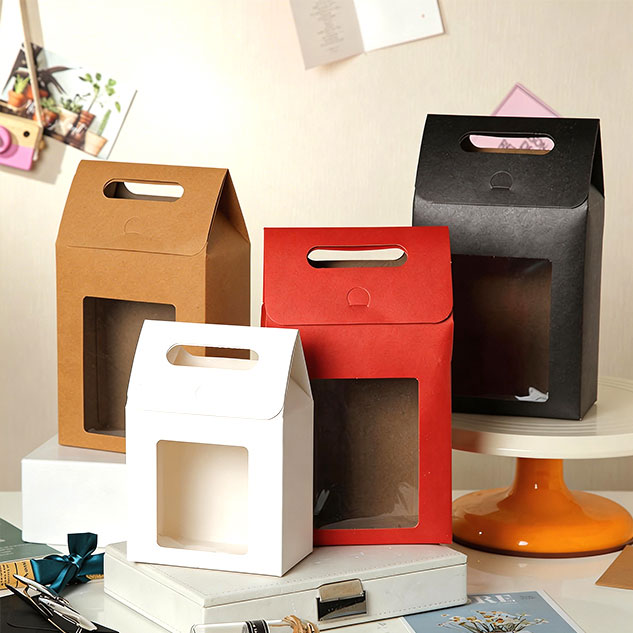
Start with these points: product visibility, paper and packed weight, window position, printed information and closure operation. Now bring all of these points together in the sample request. They assist the design team in evaluating a full package before creating bespoke layouts.
Choose Window Shapes for Kraft Paper Bags
Decide what the window needs to show
A window should show an important part of the product. For a bakery, it could be the colour or shape of an item. For example, a retailer may want to illustrate content variation without allowing customers access. A window can enhance the visual appearance of a coffee or tea package. First, identify a product feature that customers care about at the point of purchase. Next, set your window so that it encompasses the feature but also leaves substantial room for additional logo/required product information and other artwork. An excessively small window widens the gaze to no more than a fragment. If the window is large, it can take over too much of the front panel and not leave a lot for branding.
Consider what you want the customer to see when it is upright, on a shelf or in display. When the bag fills up, what we see through that window might be different. When the product moves, something else might be shown in that area and not what you intended. This can be determined sooner with a physical sample packed with an appropriate product than it could in flat design file.
Select a window shape that fits the brand
These include basic round, square, rectangular, oval and heart-shaped windows or custom die-cut shapes. If the main purpose is product visualization, a basic geometric window works perfectly. A custom shape might match a unique brand aesthetic, but it should not hinder interaction in the visible region and clutter the front panel. You should leave space around the selected shape for graphics and text. Check how far it is from the top and bottom of the bag, side folds away and any closure. It is also worth considering how the printed border or logo will sit in relation to this/open. If you are using an unusual shape, send the outline to your provider for confirmation of this die line and any tooling implications before providing final visual approval.
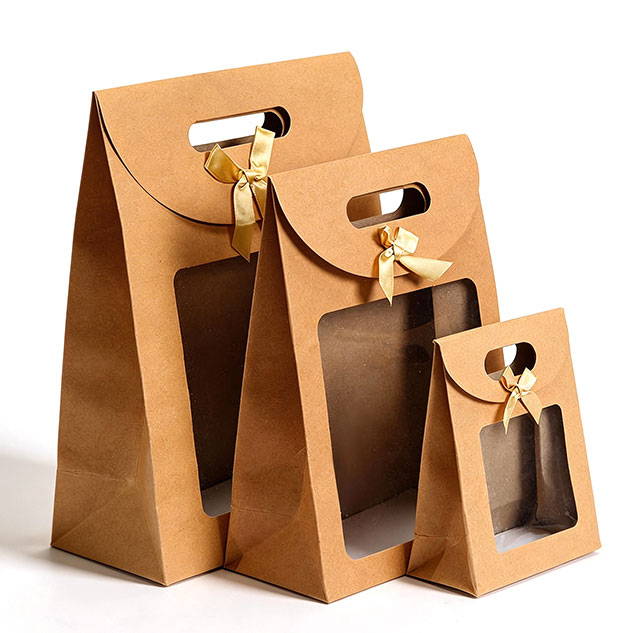
For a logo-shaped window, provide a clear vector file or outline and ask for a dieline review.
Match Paper and Closure to the Product
Match paper to the product and visual direction
And that piece of paper influences how the package looks and what the artwork’s going to look like. Natural kraft has a warm, rustic appearance and pairs nicely with muted designs or dark ink. Excellent for colourful CMYK designs, white kraft provides a more pristine and vibrant background. Buyers can also consider recycled kraft when choosing a different outer appearance. Do not choose colour without considering the actual paper. Check out packed dimensions and find the approximate weight of your product with its intended handling. Paper should work with the bag’s bottom construction and closure. In case of a specific bag style, request the manufacturer to verify existing paper weight. Do not presume that a weight illustrated for 1 configuration equates to all configurations, materials or closures.
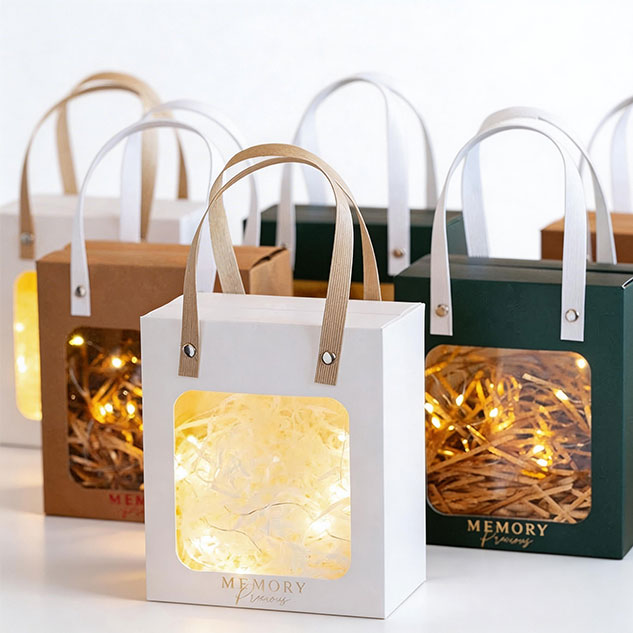
When the package is used for bakery, coffee or other products (not just display), check material suitability separately from the display effect. Find out the window material that is chosen and if it fits your specifications for product, storage and waste disposal. If you need a plastic-free window, specify that upfront and ask whether a suitable cellulose-based window is available.
Choose a closure that fits handling
Window-bag closure options can include a folded or stapled top, wire clip, self-adhesive strip or zipper. The best choice depends on how the bag will be filled, closed, displayed and reopened. A simple bag shape that has a pretty straightforward packing process can work with a folded or stapled top. In another case, a wire clip acts as a way to close items that require flexible tops. If the packaging design anticipates a different open/close experience, you might want to use either a self-adhesive strip or zipper. Verify with the manufacturer that placement and operation of the closure is correct, particularly where a custom window, artwork or top panel are concerned.
During the sample review, have your packing team test out whether they can close it. Is staff able to fill the bag? Does the closing waste space in front of a visible product area? Is there sufficient room for a label or printed material? Whether the package is still presentable for handling? These questions relate design decisions to the ongoing work of how best to fill and sell a product.
Plan Printing and Product Placement
Plan printing around the window
The window splits the front panel into clear and printed regions. Put the logo, product name and elements most important to the brand in areas where it is more visible. Do not put critical text too close to the opening, fold or seal. View both the flat view and bag assembled since gussets & folds can change their visibility in composition. Options to print this category are typically offset or flexographic and can be printed in four color as well as Pantone spot colors. Finishes can include gold, silver or holographic foil stamping. The correct approach is dependent on the artwork, order and project. Also, before you finalize the design with a manufacturer, let him/her know what colours and print coverage better suits your product.
In cases where a package uses a coloured border around the window, verify that this does not compete with the product. Establish a hierarchy: brand first, products next and supporting details where they can be read. Above all, keep important copy away from seams and folds.
Consider product placement and bag dimensions
With custom sizes, base dimensions on the packed product rather than just the item itself. Include within the bag any insert, liner or secondary wrap. Make sure that you leave enough for loading and closure, but keep the item where it belongs in sight.
Filling can be difficult with an overly tight bag. If you go too big, the contents can move around and cover up your window. Determine how they should appear individually dependent on the package containing it. A sample may be used to provide testing for whether the product remain visible when transported or being handled in a conventional manner.
Look at the bag’s footprint on a shelf and how it stands up. When the bag is transferred, consider how it is passed and carried for counter service. Use representative scenarios instead of just a one-size fits all mock-up.
Prepare and Review a Complete Sample
Prepare a useful sample request
A clear sample request helps the supplier evaluate the design. Include:
· Product dimensions and approximate packed weight
· Desired bag dimensions and window position
· Preferred paper: virgin, white or recycled kraft
· Window shape and any material requirement
· Closure preference
· Artwork, print colors and finishing details
· Expected quantity and destination
· How the sample will be reviewed and approved
If you are still in the comparison mode, request a few well-defined configurations. For instance, keep the same window shape and bag size across two samples before you change multiple variables at once. This allows for an easier color or application-based decision since you know which choice created what sort of difference.
يدعم HangPeng ODM/OEM packaging projects, including custom dimensions and print requirements. For an accurate proposal, send the product details and artwork alongside your preferred window and closure.
Common issues buyers can catch early
A window looks visually appealing but does not display the product after bagging. Test with typical contents rather than an empty sample. Ensure product visibility after shifting or stacking the pouch on a shelf.
Custom window can be on a similar level with the logo or give quite little space for information. Check the front panel at its eventual size to ensure critical elements are still readable. If the window shape matches a logo, keep that outline simple enough to allow for clean manufacturing and leave plenty of space around any text nearby.
One last common mistake is deciding on the paper and closure separately. A design may test fine on a flat print proof meanwhile necessitating that the assembled bag awkwardly needs jamming to fill or close. Review a full sample including the selected paper, opening and closure if you can.
خاتمة
The best kraft paper bag with window balances product visibility with branding and packing needs. Select a window shape according to your customers view, pick paper that helps the visual direction of the brand and choose closure that’s applicable for handheld use by your crew consistently. Verify the dimensions and materials with the manufacturer, fill them up into test bags before giving production approval. Get in touch with HangPeng to talk about your requirements.
التعليمات
Q: What window shapes are available for kraft paper bags?
A: Round, square, rectangular or oval windows and even heart shaped die-cut Custom shapes. It primarily depends on the product area you want to use and for how much space do they have available where branding (company logo, product title or CTA) will be there. Get a custom opening die line review first before approving it.
Q: What paper options can I choose for a window bag?
A: HangPeng has virgin, white and recycled kraft options for window bags. Our virgin-kraft window bags use 80–150 gsm paper. Double-check the available paper weight for your exact material, size and closure; this range is not guaranteed for all configurations.
Q: Which closure should I choose?
A: Think about how it will be filled, shown + opened. There are several closures available such as folded or stapled, wire clips, self-adhesive strips and zippers. Try the selected closure out with your common and illustrative contents to test whether it fits well in terms of packing.
Q: Can I request a plastic-free window?
A: Put that requirement on the table in our first touch, ask whether a plastic-free cellulose window is available for the proposed bag. Always double check the specific material and if it will work in your product storage conditions with manufacturer.