

Paper Bag Strength: Prevent Handle & Bottom Failures
In paper bag packaging, “strength” is not a single property. It can refer to paper strength, handle attachment strength, seam integrity, bottom performance, or the bag’s ability to withstand a defined load and handling condition. A durable bag combines suitable paper, balanced dimensions, secure handle attachment, a stable bottom, and gussets that open without concentrating stress at the folds. Evaluating these elements as one system helps prevent torn handles, split seams, and distorted bases in retail, gift, food, wine, and apparel applications.
What Determines Paper Bag Strength
Paper Weight Is Only One Variable
GSM describes paper mass per square meter, but it is not a universal load rating. Product weight distribution, contact area, and center of gravity can also affect how loads are transferred through the bag structure. Increasing paper grammage alone cannot compensate for inadequate handle attachment strength, adhesive bonding, seam construction, or bottom-panel design. Paper grammage should be selected according to the bag’s dimensions, construction, handle system, product weight, and intended handling conditions.
Bag Dimensions Change the Stress Pattern
A tall, narrow bag carrying a bottle behaves differently from a wide bag holding folded clothing. Height increases leverage around the handle area, while width and depth affect how the contents press against the base and side folds. Excess internal clearance may allow the product to shift during handling, increasing dynamic loading and localized stress at the bottom panel and gusset folds.
Why Paper Bag Handles Fail
Match Handle Type to the Application
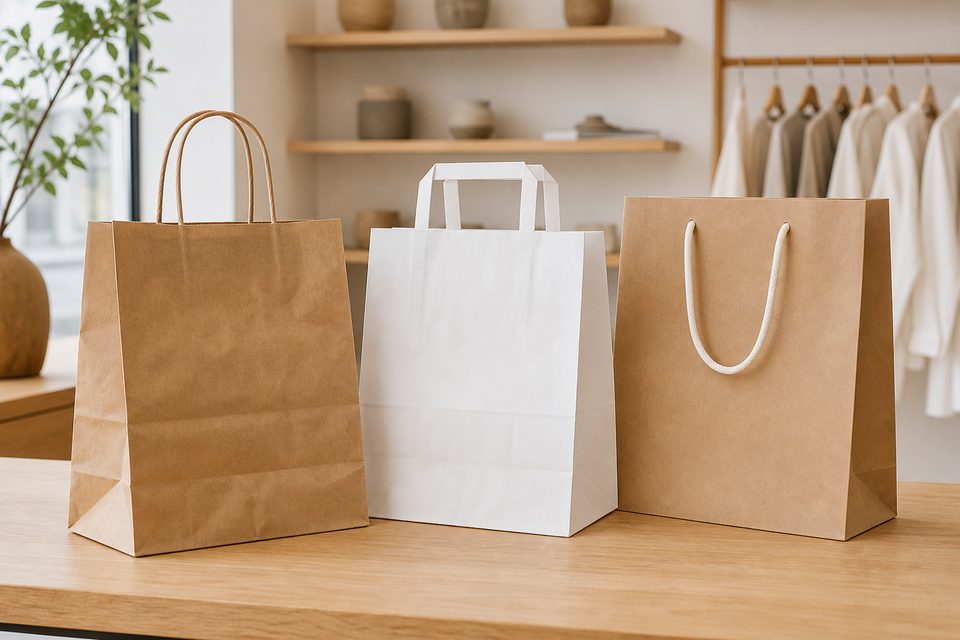
Twisted paper handles and flat paper handles suit many everyday shopping uses, while cotton cord and ribbon handles are commonly used for premium gift and presentation-oriented packaging. Die-cut handles eliminate a separate handle component, but the cut-out becomes a localized stress concentration in the bag panel. Each handle construction creates a different load path from the user’s hand through the handle, attachment zone, bag panel, side seams, gussets, and bottom structure.
The best choice considers the product shape, expected carrying position, opening width, and desired appearance. Explore HangPeng’ s paper-bag formats through the product collection when comparing construction options.
Reinforce the Handle Attachment Area
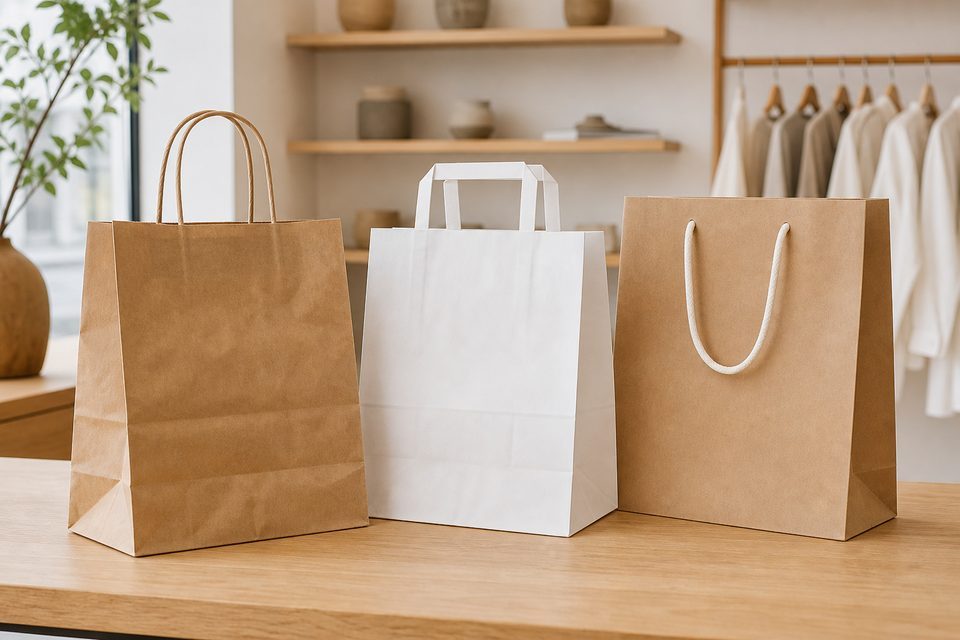
Handle failure frequently occurs at the handle attachment zone rather than in the handle material itself. The relevant design variables include handle attachment strength, pull-out resistance, reinforcement-patch size, adhesive bond area, and distance from the top edge and adjacent folds.
How Bottom and Gusset Design Affect Paper Bag Strength
Design a Stable Bottom Structure
The bottom structure must distribute product load across the base while maintaining sufficient dimensional stability for upright placement. A reinforced bottom can improve stability for wine, boxed gifts, jars, or grouped products whose weight is concentrated in a small footprint. The bottom-panel dimensions should accommodate the product footprint rather than pressing against folded edges.
Size Side Gussets for the Product
Paper bag gussets create depth and allow a flat bag to expand. If a gusset is too shallow, the contents force the side panels outward and place tension along the crease. If the gusset is deeper than required for the product footprint, excess internal clearance may allow the product to move during handling and reduce bag stability.
Material Choices for Strong Paper Bags
Natural, White, and Recycled Kraft
Natural kraft, white kraft, and recycled kraft can support different visual and functional priorities. Material selection should account for printing coverage, folds, window openings, surface finishing, and the structure required by the product. Recycled content alone should not be used as a proxy for finished-bag load capacity. Paper grade, fiber characteristics, grammage, caliper, moisture condition, construction, and converting quality all influence performance.
Treat Windows as Structural Openings
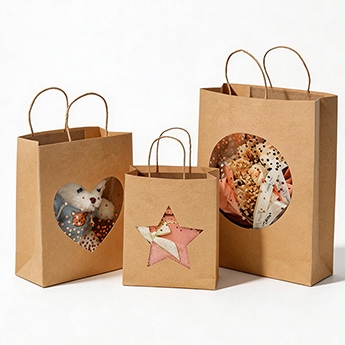
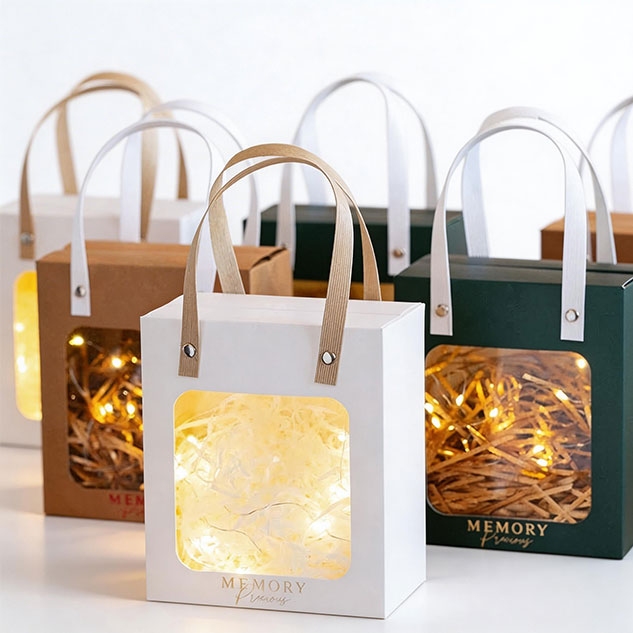
A window lets customers see food, gifts, or decorative contents, but the die-cut opening reduces the continuous load-bearing area of the bag panel. Its size, shape, position, and distance from folds influence how force travels around it. The window patch should be securely bonded, accurately aligned, and positioned clear of critical folds, gussets, and bottom seams.
For paper bags with windows, grammage should be selected according to the bag dimensions, window geometry, product load, and required structural performance.
Strong Paper Bags for Different Applications
Apparel and Retail Products
Garment bags usually need an opening and gusset depth that accept folded items without forcing the sides apart. Lightweight products can still be bulky, so volume and shape may matter more than mass. A stable base helps the bag stand during packing, while suitable handle spacing keeps it balanced during carrying.
Wine, Gift Sets, and Food Packaging
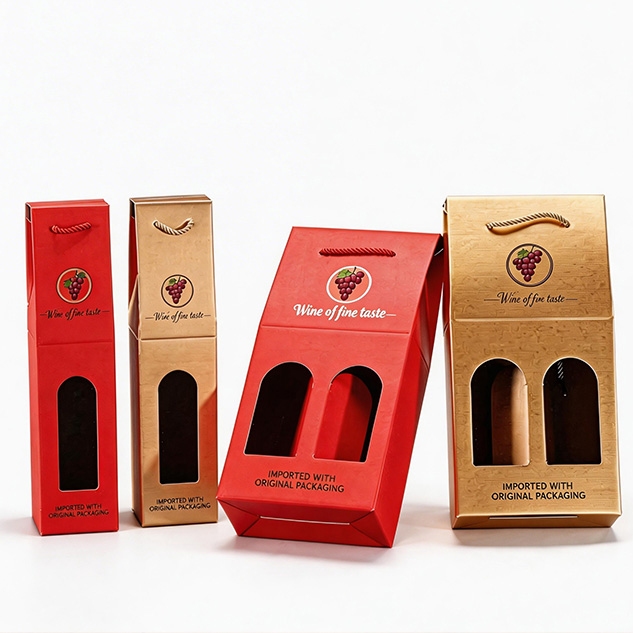
Wine bags need proportions that control bottle movement and keep concentrated weight centered over the base. Gift bags may combine several objects, making internal weight distribution less predictable. Reinforced paper bags are most effective when reinforcement is placed according to those real pressure points.
For food-contact applications, material compliance, grease resistance, moisture exposure, and temperature conditions may also need to be evaluated. The bag design should suit the packaged food product and its handling conditions; unsupported claims about moisture resistance or universal food performance should not replace application-specific evaluation.
How HangPeng Develops Reinforced Paper Bags
Structural Design and Digital Sampling
HangPeng supports custom packaging structures, including custom dimensions, handle configurations, reinforced handles, and reinforced bottom constructions for applicable bag designs. Digital 2D and 3D samples can be used to review structural proportions, artwork placement, fold lines, openings, and overall packaging geometry before production.
A solution should begin with the packed product and work outward. The packaging solution process can connect material, dimensions, printing, finishing, and assembly so that artwork, finishing, openings, and decorative features do not compromise structural performance.
Production Checks and Finished-Bag Review
Incoming paper inspection and in-process quality checks help maintain consistency through printing, surface finishing, die-cutting, folding, bag forming, adhesive bonding, and assembly. Finished-bag review should consider handle placement, fold alignment, side seams, base formation, window patching, and overall appearance rather than using visual inspection of any single feature as a substitute for structural performance testing.
Common Paper Bag Failure Modes and Design Solutions
Paper bag failures rarely result from a single material property. They are often caused by the interaction between paper performance, bag geometry, load distribution, adhesive bonding, folding, and handle or bottom construction. Identifying the likely failure mode helps determine which structural element should be adjusted before production.
| Failure Mode | Common Cause | Design Consideration |
| Handle pull-out | High local stress / inadequate reinforcement | Increase attachment area |
| Paper tear-out | Stress concentration around hole | Optimize opening geometry |
| Seam separation | Weak adhesive bond / insufficient bonding area | Review adhesive and seam design |
| Gusset tearing | Excessive crease stress | Adjust gusset geometry and scoring |
| Bottom deformation | Concentrated product load | Reinforce bottom structure |
| Window-area tearing | Reduced load-bearing area | Optimize window size and edge distance |
How to Evaluate a Paper Bag Sample
Test With the Intended Product
Load the sample with the exact product configuration, including inserts or grouped items, and observe how the base opens. Lift the loaded sample according to a defined handling protocol, observe deformation and failure points, and repeat the required number of cycles where repeated-use performance is relevant. The purpose is to reveal shifting, tilting, uncomfortable handles, or stress concentration before the design is finalized.
Do not assign a kilogram claim unless a defined test method and documented result support it. A practical sample assessment is valuable for design decisions, but it should not be presented as a standardized laboratory rating.
Inspect Handles, Folds, Seams, and Base
Look for whitening or tearing around handle holes, lifting reinforcement patches, seam separation, distorted gussets, and a base that bows under the product. Check whether the window remains clear of folds and whether finishing features intersect stress-concentration zones or critical fold lines. These observations identify where construction should be adjusted.
HangPeng’s services can support the transition from design and sampling to production checks. Clear product information at the start makes the review more relevant and helps each structural choice serve a defined application.
Conclusion
Reliable paper bag strength comes from coordinated decisions about paper, dimensions, handles, reinforcement, gussets, and base construction. When these elements are designed around the actual product and handling conditions, the finished bag can achieve more consistent structural performance and user experience.
Contact HangPeng to discuss custom paper bag dimensions, handle configurations, reinforcement options, sampling, and production requirements for your product.
FAQ
Q: Does higher GSM always make a paper bag stronger?
A: No. Higher GSM means more paper mass per square meter, but finished strength also depends on fiber properties, bag dimensions, folds, bonding, handle attachment, gussets, and base design. A heavier sheet may still fail at a weak seam or handle point, so GSM should be evaluated as part of the complete structure.
Q: Why do paper bag handles tear?
A: Handles often tear because force is concentrated where they connect to the bag wall. Misaligned holes, limited reinforcement, unsuitable spacing, or a nearby fold can make that area vulnerable. Matching the handle type and attachment method to the product, then reviewing a loaded sample, helps identify and correct these stress points.
Q: When does a paper bag need a reinforced bottom?
A: A reinforced bottom is useful when products impose concentrated loads, have rigid edges/corners, contain multiple components, or have a small contact footprint, as with bottles, jars, and some gift sets. It can improve base stability and distribute pressure, but the reinforcement still needs correct dimensions, folds, overlap, and bonding for the intended product.