

Most card inquiries we get fit on one line: “Christmas card, 5×7, need price.”
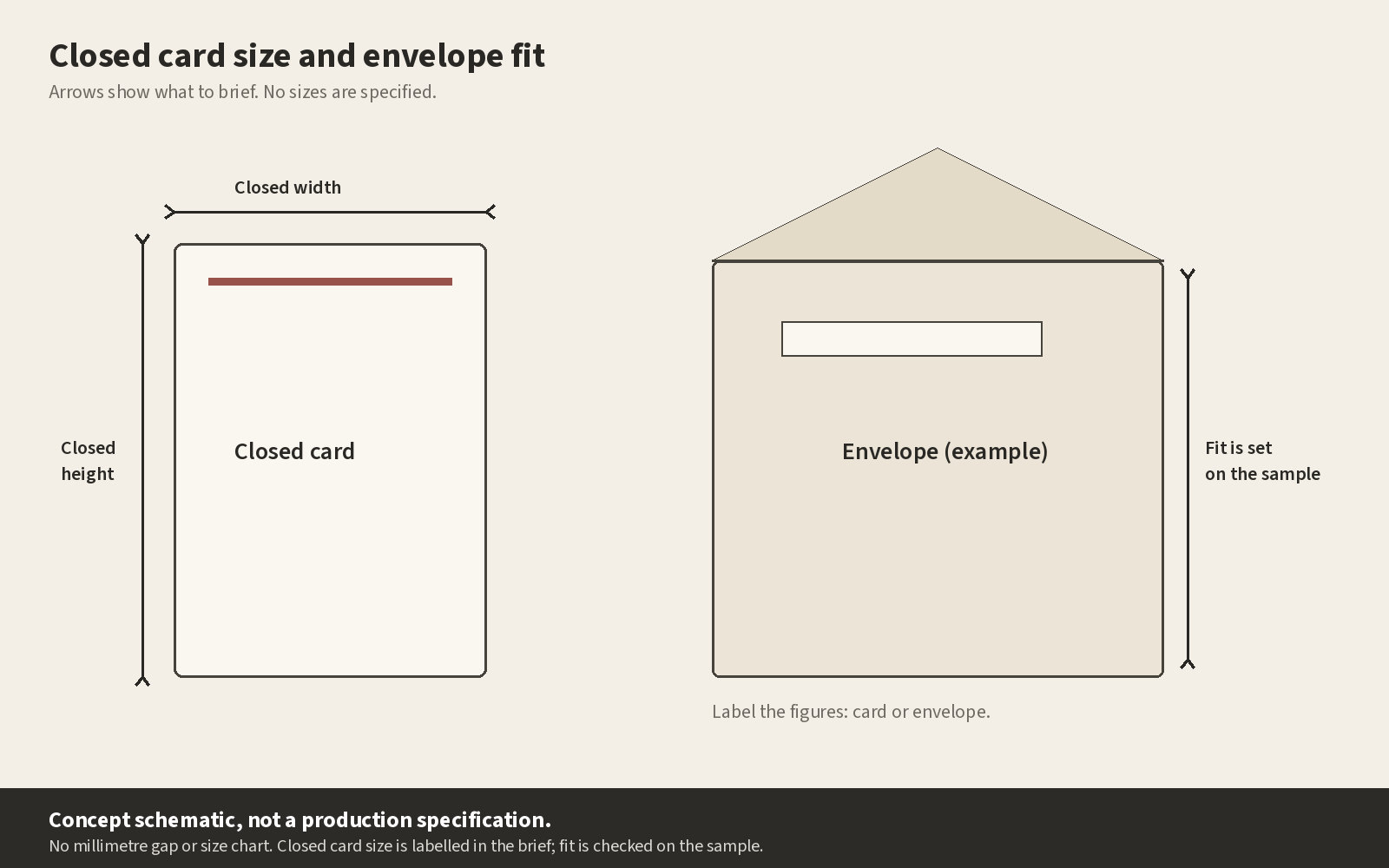
We can price that. The number just won’t hold. Is 5×7 the closed size or the open size? Coated paper or kraft? Foil on the front, or nothing? Envelope included? Each answer moves the cost, and a few of them move the schedule too.
So here is the list we go through at HangPeng before we quote any custom greeting card printing job. Settle these early and the sample that lands on your desk will look like the card you had in your head.

Three kinds of card, three spec sheets
We print three types, and they don’t share one set of specs.
Festival and retail cards. Christmas, Easter, Halloween, Thanksgiving, birthdays, graduations. These sit on a rack next to fifty others, so artwork and unit price do most of the selling. Paper runs from 250 to 350 gsm.
Corporate cards. Client thank-yous, year-end greetings, staff birthdays, event invitations. Your logo, your Pantone colours, sometimes your own typeface. We print corporate greeting cards on 300 to 400 gsm stock, because the person opening one already knows your company. A flimsy card says the wrong thing about you.

3D pop-up cards. Whole other job. Printed pages on 300 gsm art paper, the standing structure on 1200 gsm grey board, pieces laser cut, a few glued in by hand. Our standard 3D pop-up greeting card is 5″ x 7″ closed (12.7 x 17.8 cm) and 10″ x 7″ open.

Say which of the three you want in your first email and we skip a whole round of back-and-forth.
Paper weight: what the gsm number feels like
People feel the weight of a card before they look at the picture. Pick one up off a shelf and you’ll see what we mean.
Rough guide from our side of the table: 250 gsm is light, folds easily, cheap to post. 300 gsm is what most people picture when they say “a nice card”. Go to 350 or 400 and people start keeping it on the desk. Our corporate buyers mostly end up there.
Thick board brings one problem with it. Fold heavy coated stock without a crease line and the surface splits along the spine. So every folded card on our floor goes through the creasing machine first. Got a black or dark red background running over the fold? Tell us up front. Cracks show up worst on dark spines, and we might move the heavy ink a few millimetres or laminate the sheet.
Then the paper itself:
- Coated or art paper. Bright, sharp print. Photos and detailed illustration belong here.
- Recycled kraft. Brown, natural, a little rough. Colours print darker and flatter on it, so a bright white snowman comes out beige. Design for the paper you picked.
- Textured specialty paper. Feels expensive with very little ink on it. Works well with foil or embossing.
Finishes: let one of them lead
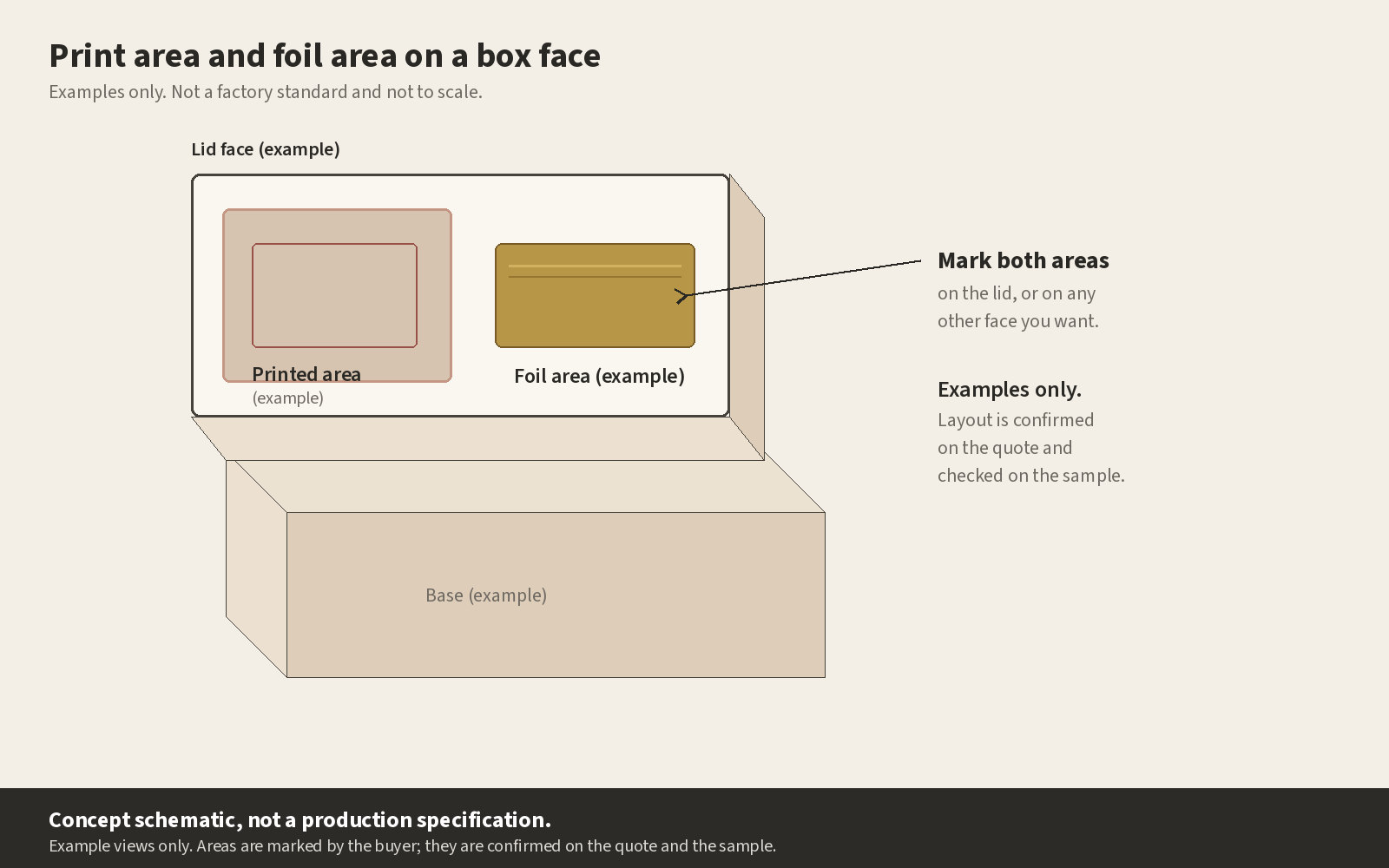
Our finishing floor can add gold, silver or rose gold foil, embossing, debossing, spot UV, die-cut windows, and matte, gloss or textured lamination. Foil stamping, die-cutting and laminating all run on our own machines in the factory, so a finish doesn’t sit waiting at an outside workshop.
That’s a long menu. Your card needs very little of it.
We’d pick one finish and let it carry the design. Gold foil on the greeting line. Or a blind-embossed logo on textured stock. Or a die-cut window that shows a bit of the inside page. Stack foil, spot UV and embossing on one 5×7 front and they compete with each other. Every extra finish also adds a production step and a line on the quote.
One note for kraft: thin foil lines and small type lose their edge on rough recycled paper. If you go brown, keep the foil areas bold.
The inside page
Buyers spend weeks on the cover and about five minutes on the inside. Then the sample arrives and the message is in the wrong font, or the year is wrong.
Corporate cards have three routes: blank inside, a general pre-printed greeting, or fully custom text with names, signature lines and your brand typeface. Festival cards can take a personalised inside message too.
Send these with the artwork:
- The final inside text, proofread by someone who didn’t write it
- Whether you want space left for a handwritten signature
- Any year or date. “Season’s Greetings 2026” turns into dead stock by February.
Envelopes, liners and retail packing
Festival cards come with a matching envelope in white, red or kraft. Corporate cards get a matching custom envelope, and you can add a printed liner. The liner is the first thing people see when they lift the flap, and it usually costs less than adding a second finish to the card.
For retail shelves, festival cards can go into individual poly bags, take a belly band, or be packed in a gift box. Pop-up cards fold flat into an individual OPP bag, so the 3D piece survives the mail.
Mailing the cards? Weigh a sample with its envelope before you sign off on the heaviest board plus a lined envelope. A small change in stock can push a card into the next postage band.
Colour: approve it on paper, not on a screen
Your monitor and ours don’t agree on colour. Nobody’s do.
Cards run on Heidelberg presses, part of our 10 printing lines. First you get a digital proof to check layout and tones. Then a press proof on the real stock. Bulk printing starts only after you approve that proof by email or on a video call.
Give us Pantone numbers. “Christmas red” means a dozen different reds.
Samples, lead time, and counting backwards
Custom greeting cards start at 5,000 pieces per order. For a feel of paper and size, we can usually send plain stock samples free; you just cover the courier. A custom sample with your artwork takes 7 to 10 days. It carries a sample fee.
Bulk production takes 15 to 20 days after sample approval, depending on quantity and finishes. Pop-up cards involve laser cutting and hand assembly, so ask us for the exact date on those.
Add it up. From final artwork to cards packed in Yiwu, plan on roughly four to five weeks, and that’s with a single proof round. Freight comes on top. Our prices are EXW Yiwu, so you or your forwarder choose air or sea and book it. For a Christmas range, count backwards from your in-store date and leave room for a second proof. Most delays we see happen during approvals, not on the press.
Cards are packed with their envelopes in protective sleeves, 50 to 100 to a carton.
Mistakes we see every season
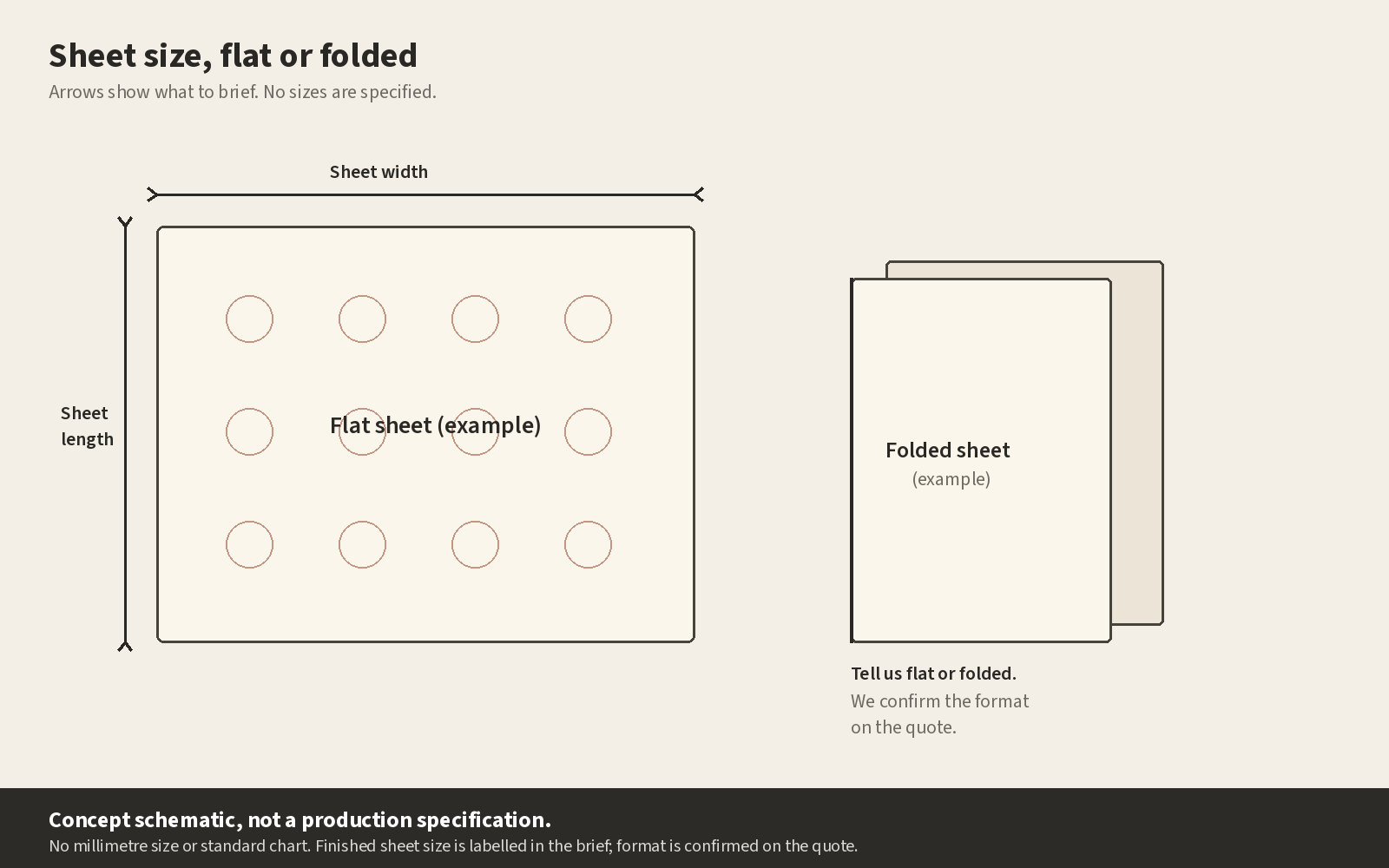
- A size with no “flat” or “folded” after it.
- Picking the envelope after the proof, then finding the colours clash.
- Approving colour on a phone screen.
- Editing the inside text after the sample is approved. New proof, new date.
- Booking Christmas cards in October.
What to send for a quote
- Card type: festival, corporate or pop-up
- Flat size and folded size
- Paper weight and stock, or the look you’re after
- The one finish you care about most
- Final inside text
- Envelope colour, logo, liner yes or no
- Pantone references
- Quantity per design
- In-hand date and destination
No artwork yet? Our design team produces around 1,000 new designs a month, so we can draw something from scratch or adapt an existing layout to your brand.
HangPeng has been printing in Yiwu since 2000. Send the list to aaron@yc-gift.com or pengtaolou97@gmail.com, or message us on WhatsApp at +86 130 5899 5000, or use our contact page. We’ll quote the card you actually want.
FAQ
What is the MOQ for custom greeting cards?
5,000 pieces per order.
What paper weight works for a custom greeting card?
For retail and festival cards we print on 250 to 350 gsm. Corporate cards usually go heavier, 300 to 400 gsm, because a thicker card feels more like a gift. Pop-up cards combine 300 gsm printed pages with 1200 gsm grey board for the structure.
Can you match our brand colours exactly?
Send Pantone numbers and we print to them on Heidelberg presses. You check a digital proof first, then a press proof on the real paper. Bulk printing starts after you approve the press proof.
How long does a custom greeting card order take?
A custom sample takes 7 to 10 days. Bulk production takes 15 to 20 days after you approve it. Freight time depends on whether you ship by air or sea, since we quote EXW Yiwu.
Do the cards come with envelopes?
Yes. Festival cards come with matching white, red or kraft envelopes. Corporate cards get matching custom envelopes, with an optional printed liner.